The Devil's Deck or a Healer's Tool?
A commentary on where the power of tarot actually lies
Tarot: The Devil's Deck or a Healer's Tool?
Gasp! It's a dramatic part of the movie and the weird witchy lady pulls the death card. Oh no! Everyone is gonna die now. You know what? I’m feeling nefarious. Let's summon a demon with my playing cards and curse our neighbors. I’m sure we’ve all come across some form of tarot doing or predicting evil, but would you believe me if I told you they can actually be a tool for healing and guidance? You may be wondering how we got here.
History of Tarot
The exact origin of tarot isn’t known, as there are many influences, including similar games across many years and countries traceable back to the 12th century. Europe adopted their own playing card deck in the 15th century, which is believed to be the beginning of tarot as we know it today. This spent 3 centuries as a simple card game for the rich. The most evil thing in its creation was its intent to segregate the financial classes (and exploit the wealthy, but I’ll leave it up to you to decide what’s worse).
In 18th-century France, clergymen and occult writers gave them a new use and started using them for divination, eventually influencing the terminology and interpretations of the Major and Minor Arcana that we use today. In 1909, an artist (Pamela Colman Smith) and a writer (Arthur Edward Waite) combined their passions to create the Rider-Waite-Smith deck that we know as the original deck. Using a combination of playing cards and divination cards, they created symbolic and artistic imagery.
What is Tarot?
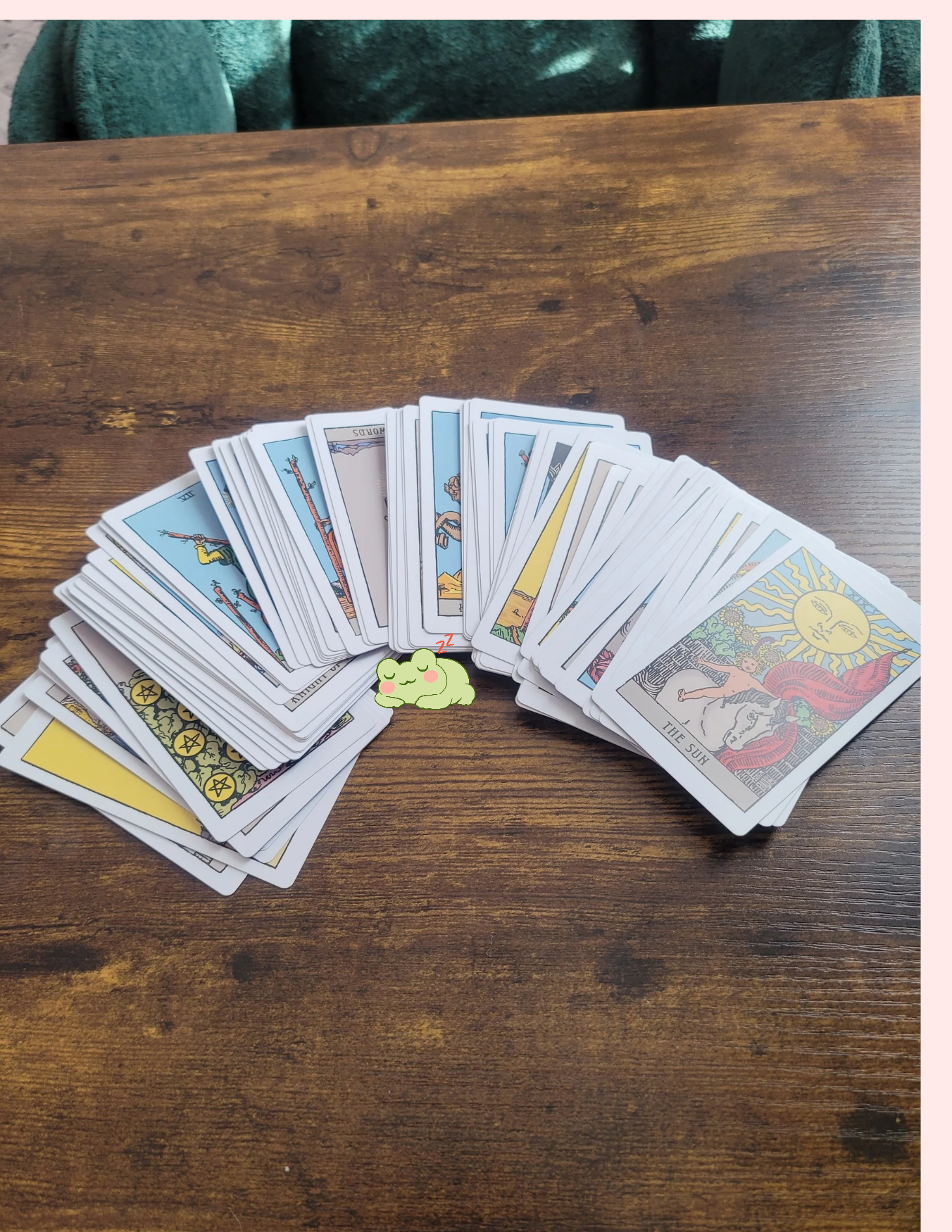
I prefer to think of tarot as a tool. Just as a sword is protection in the hand of the hero and death in that of the villain, the wielder ultimately decides what power is drawn upon. Tarot is a set of cards using symbols of Freemasonry, Christian mythology, and other intuitively chosen art. There are 2 main parts: the Major and Minor Arcana. The Major Arcana consists of 22 cards, representing the journey of the Fool and the stages, tools, and experiences he may come across in the goal of discovery and fulfillment. The Minor Arcana is more reminiscent of the playing cards that we began with. There are 4 suits: Wands, Cups, Swords, and Pentacles. Each suit has the ace through ten and 4 court cards.
Is There Any Real Danger?
I mean, in the physical world, they are simply cardboard and ink. I would say any danger lies with the reader. If we have a misinterpretation and make a devastating change to our lives, that can be a tragic turn of events. If we are learning, we might get freaked out by the death card because of its media portrayal. The biggest thing to remember when reading is that everything is symbolic and not necessarily a direct answer. And when receiving a reading, take what resonates and leave what doesn’t.
The other common fear is summoning evil from the unseen world. Ultimately, we have autonomy in our own lives, and there are many things you can do to protect yourself spiritually and energetically. Cleansing your space and cards, focusing your energy on the reader and querent, and avoiding fortune-telling or “just playing” energy are just a few things that can help.
Conclusion
Overall, I have seen a much bigger impact from the intent of the participants than from the cards themselves. The cards have energy and frequency, but they are matching your energy as you intuitively pull them to answer the questions you are asking. If you take one thing out of all of this, I’d say YOU HAVE THE POWER. You are the one who gets to decide the experience you have.
Make space for a personal reading →